Is Solar Shading Worth It? What to Consider After a Hot Summer
A hot summer quickly reveals which parts of your home need better shading. If the same problems returned whenever the temperature rose, you may now be wondering whether solar shading is worth the investment.
The answer depends on how often the problem occurs, how much it affects the way you use the room and what would be required to solve it.
Start with the problem, not the product Solar shading covers a wide range of internal and external blinds, shutters and awnings. Rather than beginning with a particular product, identify what you want to change.
Ask yourself: • Does your room become too hot? • Is glare the main problem? • Do you have to sacrifice daylight to gain privacy? • Is your window difficult to reach? • Does direct sunlight affect your furniture or flooring? • Are you unable to use part of your garden comfortably?
You may have several concerns, but deciding which one is most important will make it easier to choose an appropriate solution.
How often does the problem occur? Think back over the summer. Did you regularly: • Avoid a particular room? • Move to a different seat to escape the sun? • Close the curtains during the day? • Struggle to see a television or computer screen? • Find a bedroom too warm at night? • Avoid your patio during the hottest hours?
If the answer is yes, improved shading could make a noticeable difference to the way you use the space.
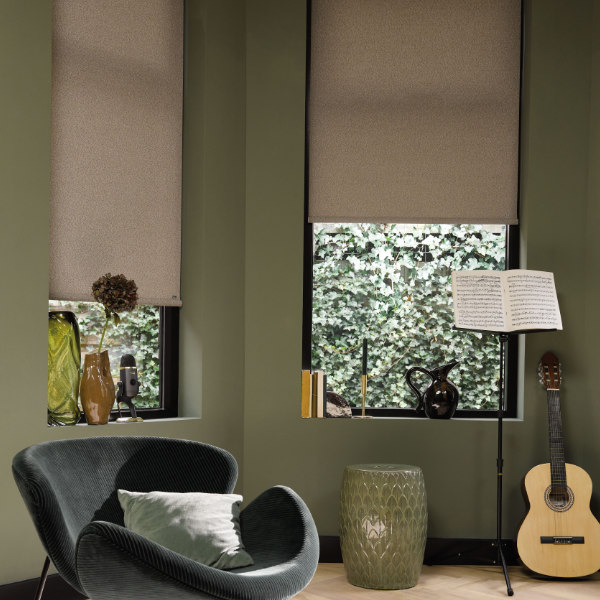
How to choose between internal and external shading For many windows, a made-to-measure roller, Venetian or pleated blind will provide suitable light control and privacy. Internal blinds work well in most rooms, particularly when privacy and glare are the main concerns.
External shading becomes more relevant when strong sunlight is causing persistent overheating. It intercepts direct sun before it reaches the glass, which can make it a useful option for large south- and west-facing windows.
An awning can also shade a patio and nearby doors at the same time. External Venetian blinds provide more targeted control for heavily exposed glazing. This does not mean that every sunny window requires an external system. It is usually best reserved for problem areas where internal shading has not provided enough protection. You can read our separate guide to internal and external blinds for sunny windows for a fuller comparison.
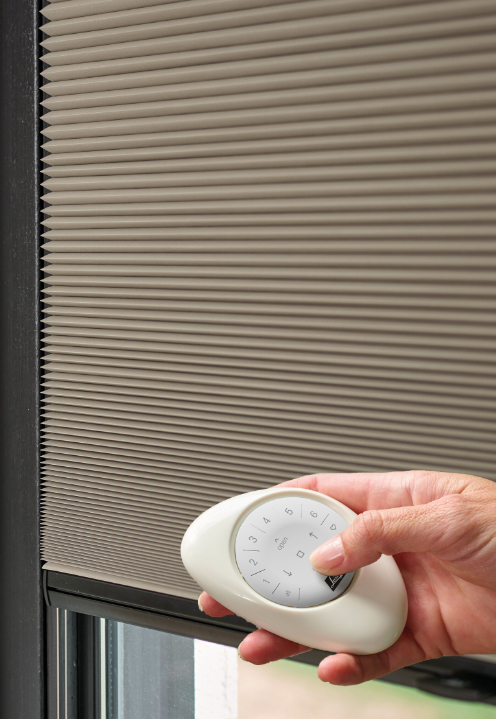
When is motorisation worth paying for? Motorisation is most valuable when it solves an access or usability problem. A manual blind may be perfectly practical on an ordinary window, but motorisation is recommended when the blind is fitted to a rooflight, gable end or tall window. Motorisation can also be useful when several blinds cover a large glazed area and need to be adjusted together. Ask whether manual operation would be easy enough for everyday use. If a blind is awkward to reach, it may remain in the same position and provide little practical benefit. For accessible windows that only need occasional adjustment, manual controls may be all you require.
Could solar shading reduce your energy bills? Solar shading may reduce the need for mechanical cooling in some properties by limiting the amount of direct sunlight entering the building. Insulating blinds can also improve comfort around windows during colder weather.
However, there is no universal saving or fixed payback period. The result depends on the glazing, orientation, chosen product, quality of the fit and how the shading is used. It is better to view energy performance as one part of the decision. Comfort, glare control, privacy and the ability to use the room should also be considered.
Use the end of summer to plan ahead August is a useful time to assess solar shading because you can still see where direct sunlight falls and how it moves through your home.
Make a note of which windows are affected, what time the problem begins and when it ends. Consider whether heat, glare or privacy causes the greatest difficulty. This information will make it much easier to compare suitable products.
You do not need the same solution at every window. One room might benefit from an adjustable internal blind, while a heavily glazed extension may need external shading. The best approach is often targeted.
So, is solar shading worth it? Solar shading is worth considering when sunlight causes a recurring problem that affects how you use your home.
The right solution may be a straightforward made-to-measure blind. For more exposed glazing, it could be an insulating blind, an automated system, an awning or external shading. What matters is choosing a product suited to the window and the result you want.
If this summer highlighted a problem room in your home, book a free at-home consultation with us. We can assess your windows, discuss how you use the space and recommend a solution that is appropriate for your property.